A Beginner’s Guide to Forest Bathing in California State Parks

Published: January 14, 2026

As we enter 2026, many of us are looking for ways to reconnect with nature and with ourselves. One practice that has gained renewed attention in recent years is shinrin-yoku (森林浴), also known as forest bathing. 


What Is Forest Bathing, a.k.a. Shinrin-Yoku?  

Forest bathing is the simple and therapeutic act of spending time in nature, slowing down, immersing ourselves in our surroundings, and it has been shown to support both mental and physical health.   

Unlike other outdoor activities such as hiking or running, forest bathing focuses on paying attention to our surroundings with our senses — smell, sight, hearing, touch, and taste. The goal is to fully experience a natural space and find a calm moment of peace.  

Slowing down and engaging with nature in this way has scientifically supported benefits. Research shows it can boost the immune system, lower blood pressure, and help reduce symptoms of depression. It can also lower stress hormones such as cortisol and adrenaline, helping to calm the body’s fight-or-flight response. 
 

Person walking on a wooden bridge, Fern Canyon, Prairie Creek Redwoods State Park, California.


Where Did Forest Bathing Begin? 

The history of shinrin-yoku (森林浴) began in 1980s Japan. As urban sprawl, dense populations, and areas with limited green space spread across the country, so did apparent associated negative effects such as depression, anxiety, and stress. In response, the practice and concept emerged as a preventative physiological and psychological health exercise, encouraging people to quite literally take in the forest atmosphere to help counter these effects. 

While the term was coined in Japan, many cultures have long recognized the importance of the natural world to human health. 
 

Shinjuku, located in Tokyo, Japan. 1980.


Where Can You Forest Bathe in California State Parks?  

While the literal meaning of forest bathing refers to spending time among trees, California offers a wide range of landscapes beyond forests. From coastal bluffs and deserts to wetlands and grasslands, the state’s natural spaces provide many opportunities to practice forest bathing in different settings, and even if towering redwoods aren’t close to home, local parks and green spaces can still offer moments of calm and connection with nature.  

While research shows that some benefits may be strongest in forested environments, spending time in California’s unforested state parks can still be deeply beneficial. With 280 state parks across the state, the practice becomes less about the exact landscape and more about the intention.  

By slowing down, disengaging from the outside world, including phones when it is safe to do so, and engaging with nature using all our senses, visitors to California’s state parks can experience the calming and restorative benefits of forest bathing. Check out these free ways to get into California’s state parks to help you plan your next visit. 
 

Person strolling along Garrapata State Park.


How to Forest Bathe in California State Parks:  

1. Find a location in nature: 

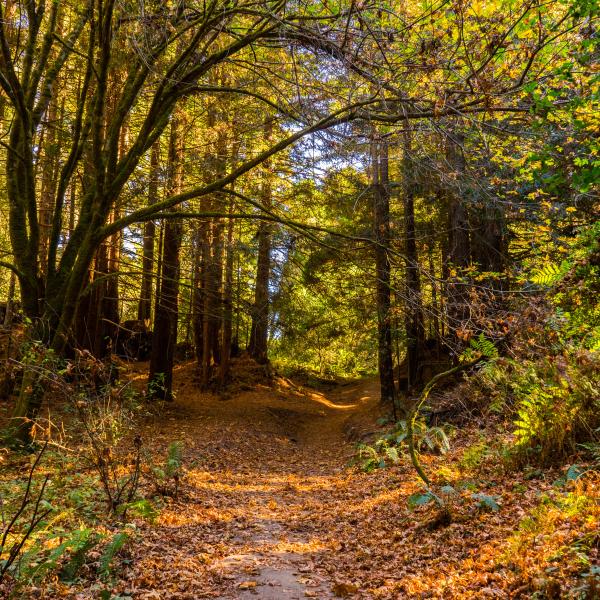
The ideal place is a quiet area surrounded by trees, as environments with greater tree cover and natural sounds may be especially effective at reducing stress and mental fatigue. Still, any green space, including urban parks, can support these benefits and help improve mood and reduce stress. 


2. Set aside time: 

Spending more time in nature has been shown to deepen the benefits of forest bathing, with research suggesting that longer visits can lead to greater reductions in stress. While a range of two to six hours is often cited as ideal, even shorter visits can be meaningful. Studies show that as little as 15 minutes spent in a natural setting can help reduce stress and anxiety, making forest bathing accessible even on busy days. 


3. Aim to reduce heart rate: 

Forest bathing is most effective when you set the intention to move at a slow and gentle pace. Slower movement in natural environments supports a lower heart rate and blood pressure, helping the nervous system settle. Rather than approaching this time as exercise, moving slowly allows the body to shift out of a fight-or-flight state and into rest and recovery. 


4. Engage all senses, especially scent: 

You might ask yourself: What scents do you notice in the air? What sounds can you hear nearby? What textures do you feel beneath your feet or fingertips? Using your senses helps deepen the restorative effects of forest bathing. In particular, scents released by trees and plants play an important role, as natural compounds called phytoncides can help reduce stress and support immune function. Paying attention to sounds, textures, and smells helps anchor the body and mind in the present moment. Taste can also be included thoughtfully, such as slowly enjoying a cup of tea, or a bowl of fruit while forest bathing. Be sure to practice leave no trace if you bring snacks!  


5. Take a moment to meditate: 

Taking a moment to pause can help complete the forest bathing experience. Finding a quiet place to sit and practice simple meditations, such as gentle breathing exercises, journaling, affirmations, or quiet observation, allows the mind to slow and settle. Even a few minutes of stillness in nature can help ease mental tension and deepen a sense of calm. Check out this REI guid for more tips to meditating in the outdoors. 

 

Mount Tamalpais State Park


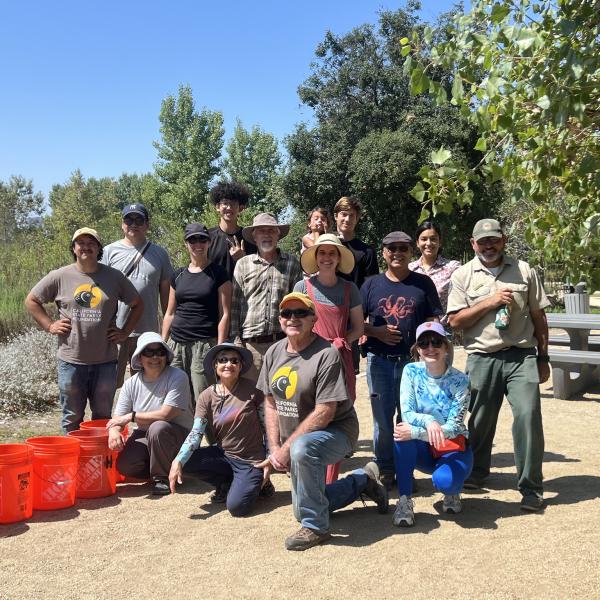
Forest bathing does not have to be a solitary activity. Bringing a group with you can still be energizing and meaningful, if everyone shares the intention of slowing down and immersing themselves in nature together. Many guides also offer forest bathing experiences, including Roz Greenfield of Redwoods and Greenfields, who has previously led California State Parks Foundation members on a forest bathing experience at Mount Tamalpais State Park. In addition, there are many online resources and virtual offerings available, making forest bathing a more accessible practice for those who may not be able to visit a park in person! 

As humans, we evolved in close relationships with the natural world, and spending time in nature taps into a deep, instinctive connection that continues to support our physical, mental, and emotional wellbeing, often referred to as the biophilia effect. 

Forest bathing offers a simple reminder that slowing down and connecting with nature does not have to be complicated. Whether practiced alone or with others, guided or self-led, the heart of the practice is intention, presence, and curiosity.  

Plus, with hundreds of diverse landscapes to explore, California state parks provide countless opportunities to step away from daily distractions and reconnect with the natural world. The next time you visit a park, consider slowing down, engaging in all our senses, and allowing yourself space to simply be present in nature. 
 

Image
Jedediah Smith Redwoods National and State Park, California

Protect the parks that support our minds and bodies!

Become a member of California State Parks Foundation today for just $25 to support the care and protection of California’s state parks and receive member benefits.

Take Action now For a Lasting Difference

Your voice and support are crucial for the immediate needs facing our state parks.

Natural Bridges Monarch
Protect Now
Protect Western Monarch Butterflies!
Santa Monica Mountains 2025
Take Action
Release Prop 4 Funding Immediately!