Have you heard of the wildflower super bloom expected this spring?
Super blooms are a rare phenomenon that occurs when prolonged drought is followed by significant rainfall. Dormant wildflower seeds bloom in mass amounts, creating a stunning sea of flowers. These unpredictable floral displays are expected to attract thousands of people this spring. Here are some tips on how visitors can safely and responsibly explore the blooms!
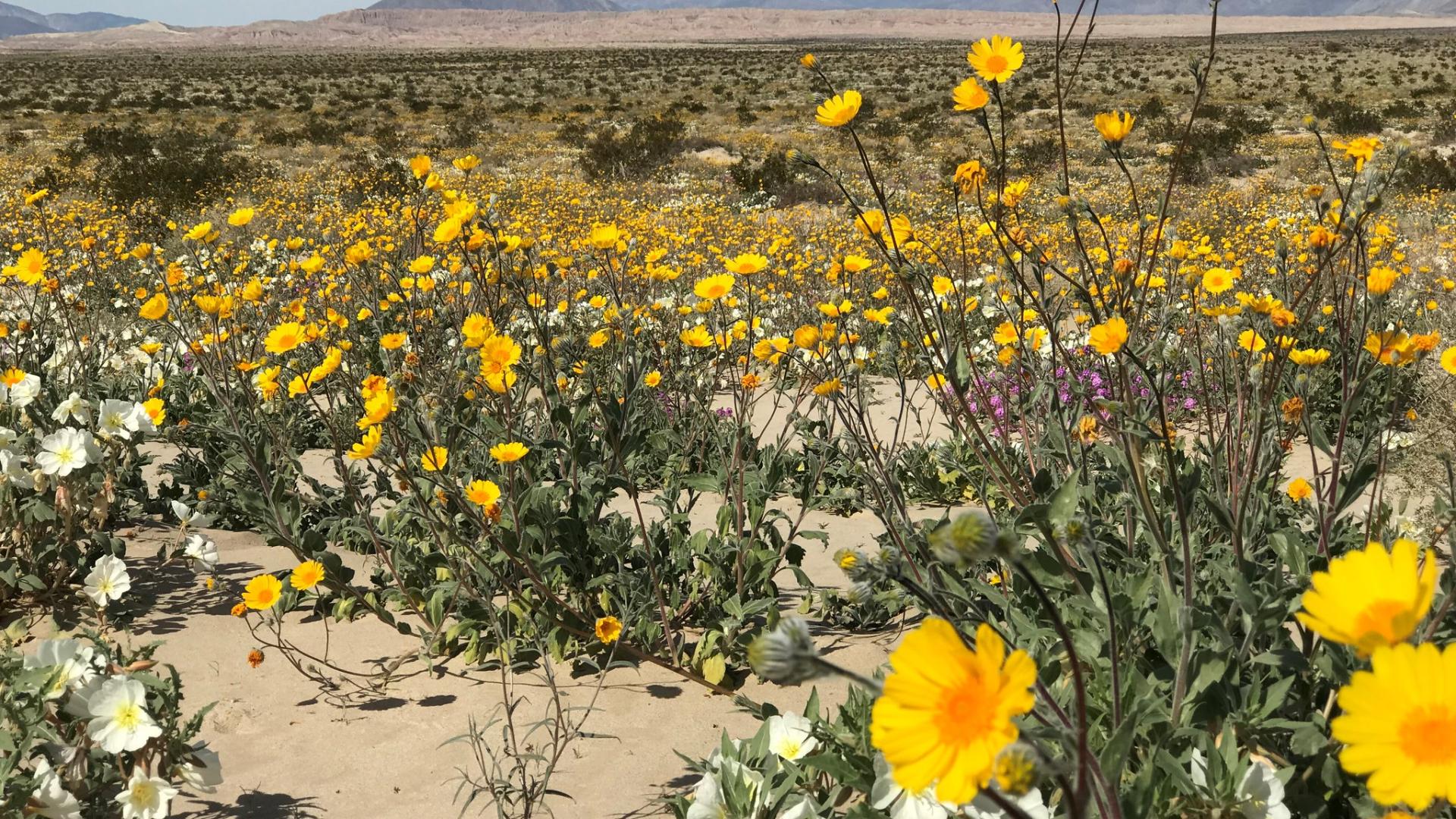
Desert lilies during the 2019 super bloom at Anza-Borrego Desert State Park. Courtesy of California State Parks, 2019
Dogs are permitted in certain parks but must remain on leash on designated roads and campgrounds. Dogs are not allowed on hiking trails, backcountry, or in the wildflower fields. Do not leave dogs unattended in your vehicles — temperatures can reach lethal levels.
Leave the park better than when you arrived. Pack out anything you packed in, including trash.
2019 super bloom at Ocotillo Wells State Vehicular Recreation Area. Courtesy of California State Parks, 2019
What Causes the Super Bloom?
Super blooms occur when years-long drought is followed by heavy rain. The prolonged drought eliminates grasses and weeds that would otherwise remove nutrients from the soil, leaving ample nutrients behind for wildflowers once the rain returns. Because California was fortunate to receive more rain last fall and this winter, many expect impressive wildflower blooms this spring.
Some of California’s most beautiful super blooms are found in desert landscapes. In 2017 and 2019, colorful arrays of wildflowers carpeted Antelope Valley California Poppy Reserve State Natural Reserve, Anza-Borrego Desert State Park, and Ocotillo Wells State Vehicular Recreation Area, including stunning arrangements of California poppies, sand verbena, desert sunflowers, evening primrose, popcorn flowers, and desert lilies!
Viewing a super bloom is an exciting and awe-inspiring experience for visitors. However, these glorious events are threatened by increased foot traffic that can harm the delicate blooms, invasive species, ongoing development, and climate change. Wildflowers play critical ecological roles, like providing food for pollinators, reducing erosion, and storing carbon from the atmosphere. For these reasons, they deserve to be treated with respect and care during their most abundant season.
Photo by Thomas Haraikawa of the 2017 Antelope Valley California Poppy Reserve State Natural Reserve super bloom.
If California state parks experience significant blooms this year, we want visitors to be prepared. Check out this list of state parks with wildflower bloom information and updates, park rules, and tips at www.parks.ca.gov/WildflowerBloom.